the NachtKabarett

All Writing & Content © Nick Kushner Unless Noted Otherwise
In collaboration with Gilles R. Maurice
A film about the Golden Age of Grotesque created during the making of the album, and birth of a new era for its creator. The audio recording that accompanies this took place on April 1, 2002, and remains in its entirety.Commentary concluding the Doppelherz video
This is thought by many to be the most rare look into the mind of the person we know as Marilyn Manson. It is also believed (but will not be confirmed or denied by Manson) that these words were intended to be his last, meant only for those who were listening... particularly his beloved feline familiar, Lily White.
The film offers no explanation, nor needs one. Many thank to those who helped make this the beginning, not an end, to the most amazing era of Marilyn Manson.
 |
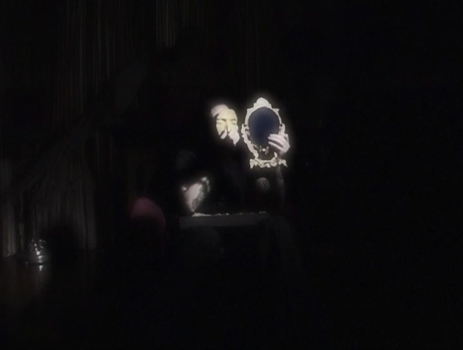 |
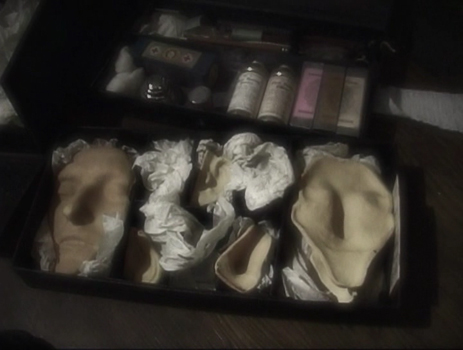
| In relation to the theme of the 'Doppelgängers' present in the album's lyrics, Manson can be seen wearing a mask with closed eyes in the beginning of the video, paradoxically admiring himself in a mirror. The theme of the mask and doppelgängers would later re-surface in the Celebritarian era's imagery. | |
The limited edition film directed by Manson which came with The Golden Age Of Grotesque, Manson has said, is a stream of conscious directly into the mind and ethos of who and what Marilyn Manson is. For those unfamiliar, the term 'stream of conscious' was first used in the poetic sense by the early Nineteenth Century Transcendentalists such as Ralph Waldo Emerson to describe the mechanism at work of the poet writing forth his thoughts as they come forth, unabridged and unedited in a similar sense that automatic writing is used, which paints a very personal and very internal portrait of the poet. Albeit often so personal that the significance is easily missed as it delves so deep within the interior mind of the composer. Many elements of and in The Golden Age Of Grotesque, as Manson has said, are what they are in that they aren't meant to be "understood" via conventional means, they exist and they're in existence to be absorbed and taken in for what they are. DOPPELHERZ is this stream of conscious into the very personal mind of Marilyn Manson, unhindered and unobscured by any metaphors of previous eras, which have been thoroughly misunderstood by many, the thoughts plain and pure; abstract expressions like DaDa. In its writing/creation Manson ordered everyone else outside of the recording studio, laid out all of his open notebooks and recorded as each thought as it came to create what has been made.
 |
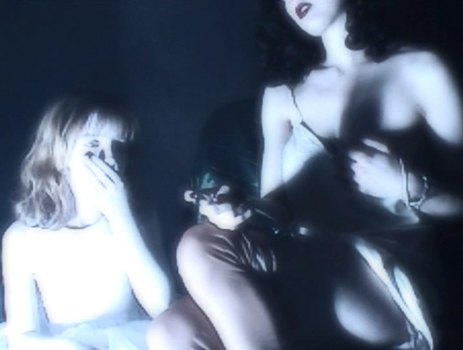 |
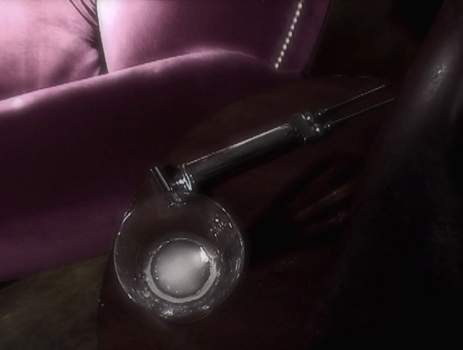
| Left; closeup on the doppel-needle used on the picture of Dita from Manson's collaboration with Gottfried Helnwein fully described on our Grotesk Burlesk page, actually based on a Manassé picture from the book Voluptuous Panic. Several alternate shots can be seen flashing near the end of the video (right). | |

Following in the theme of the redefinition of Marilyn Manson, DOPPELHERZ acts very much as a prelude to The Golden Age Of Grotesque, another key or element presented to 'understanding' this new beginning. The most significant aspect of the film is the overlay and repetition of the album's introduction, THAETER, which both illustrates that the film is a prelude and also plays into a very specific aspect of Manson's monologue. Towards the completion of the film a reiteration Manson makes is:
As you are listening, I want you to know that you are nothing but a screen,
That I project my images of suffering, sorrow, pain, sex
And the brief glimmer of happiness I find, in the misery
Of those who are sitting in the theatre of which this screen exists
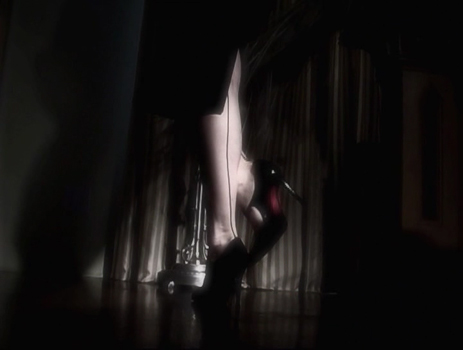 |
 |
As Manson has said often, his art is only art until it's been viewed by someone, and the conception his audience has, the manifestation and form it takes in their mind, is when the creation is complete and whether that conception is "right" or "wrong" based on the artist's original intent is superfluous because the art has taken on a life of its own and had become tangible reality in that we're affected by it. The reiteration Manson quotes towards the end of the film reflects this, that WE, the viewers of Manson's art, are part of The Golden Age Of Grotesque and that it becomes manifest through us, and this completion of his art through his audience, is what he gains his pleasure from. We are the "screens that (he) projects (his) images of suffering, sorrow, pain, sex" upon and our viewing of his art is the THAETER.
 |
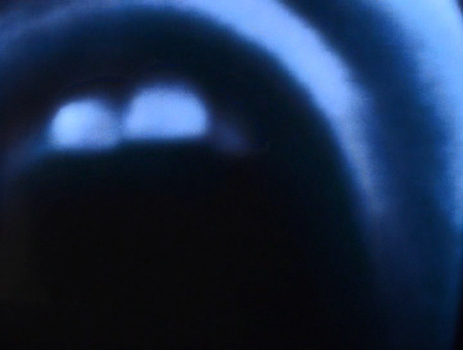 |
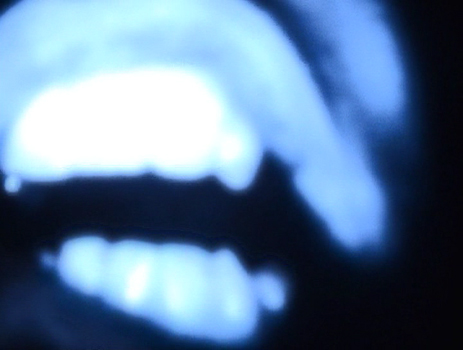
| The movie is interspersed with blueish close-up sequences on Manson's threatening jaws, which re-appear on Valentine's Day, 2003 in Manson's short movie "The Mechanism of Desire," made available on his Journal, and where the mysterious Hitchcock sample heard on MM.com in 2006 was first used. | |
Of course the aspect that is half facetious/sarcastic is that he finds happiness in his viewer's misery, which is done mockingly at those who feel it's "expected" that someone such as Manson would be a beacon for pain and misery. It's a theme that plays out throughout the album but especially in the title track where Manson proclaims, "We are the LOW ART GLOOMINATI and we aim to depress". Gloominati is a play on the words, the prefix gloom juxtaposed with Illuminati to insinuate Marilyn Manson as a dark, overly sinister misery spreading entity, which again is done so sarcastically as they bring nothing but joy to myself and anyone else who gets "it".
 |
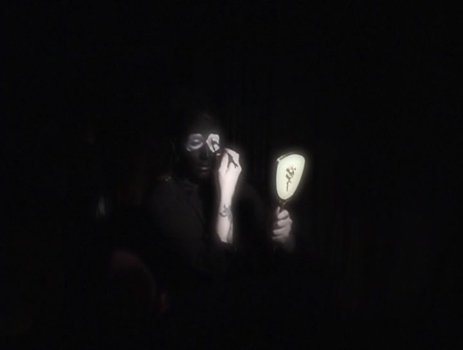 |
| Left; Tim Skold in an evocation of Günter Brus' "Self-Painting, Self-Mutilation", a makeup he also wore at the Resident Evil premiere in 2002, and again at his depature from the band during the 2007 Rape Of The World tour. Right; Manson progressively painting himself in Blackface throughout the video, announcing the aesthetics of his new era (a closeup on a Blackface photograph from his collaboration with Gottfried Helnwein also briefly appears in the video). | |
As stated elsewhere in the Celluloid section of my site, the flow and imagery of this film is very much evocative of Pasolini's SALO in many respects. Firstly the flow of the film and each of its section is very reminiscent to the allusions of the overlaying "Circles Of Hell" imagery Pasolini used in SALO, as well as the concept of capturing something rare and beautiful as Manson did with the siamese twins in DOPPELHERZ. In SALO, each of the 9 boys and 9 girls were inspected thoroughly before they were chose to be degraded, the most striking example of this was when a girl was refused because of her poor teeth, although supple and desirable in every other aspect, the Libertines wanted only the most perfect and the most beautiful to be defiled and humiliated. And it's the allusion of this that puts Manson in the role of the libertine, wanting only the most rare and beautiful, to inflict his images of "suffering, sorrow, pain and sex" upon. It's the role of Manson as de Sade, while not literally, but another artist who suffered at the hands of the society he lived in for his art.
 |
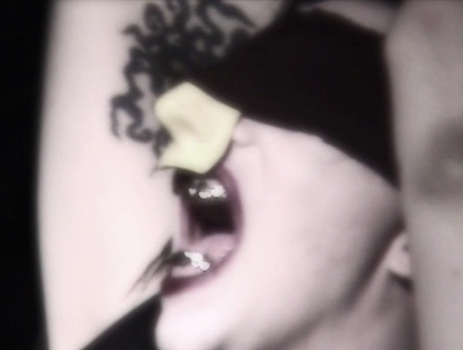 |
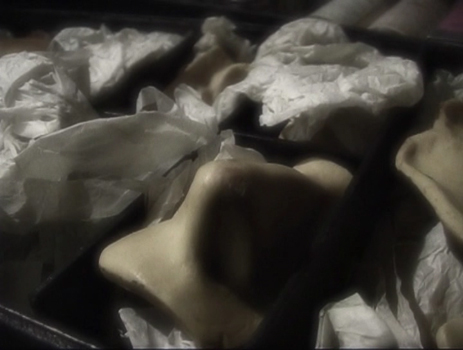
| Manson wearing blindfold and prosthetic nose, right before he lets his visions surface... As mentioned in the Grotesk Burlesk article on The NACHTKABARETT the use of masks and prosthetic face features was common during the decadent years of Weimar Germany, which was key influence of Manson's new album. | |
But also in keeping it originally Manson it's also a scathing criticism modern society, particularly for example, "the young are too senile, the young are too Sieg Heil" where children (and adults) are taught to blindly follow without question or independent thought. So while seemingly very abstract at times everything within the film has meaning and the juxtaposition of the surreal images accompanying the stream of conscious is very Dadaesque in nature but it all comes back to how it's viewed and the emotions it evokes, which is the essence of Marilyn Manson and the viewer making his art complete.
Lyrics from Doppelherz."The young are too senile / The young zeich heil".
 |
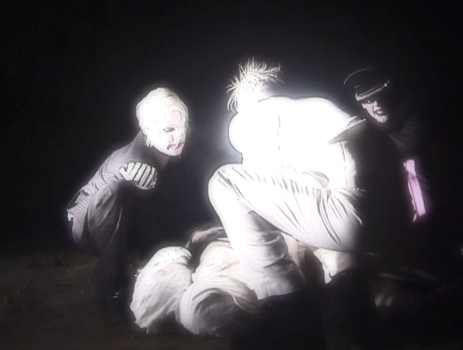 |
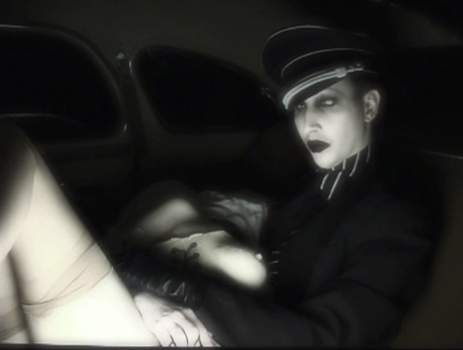
| Left; Manson wearing his infamous SS officer cap. Right; John 5 adorned with the nazi military bandsmen's Schwalbennester on his shoulder. For more on Manson's allusions to fascist imagery read the 'Degenerate Art & Fascism' article on The NACHTKABARETT. | |
 Frontal shot of the Graham Hollywood in DOPPELHERZ.
 Self portrait photograph of Man Ray in a Graham "Hollywood Supercharger,"
the same car Manson, Skold & John 5 drove in DOPPELHERZ.
I decided to get a car. It should be a new one. I did some window shopping. Then I saw my car, discreetly advertised. It was a low, closed body, four seater, completely streamlined without any excess chrome trimmings, the finish, metallic blue, the interior blue, my favorite color. I could see myself in it with my bright blue tweed jacket livening up the color.Man Ray
 |
 |
| Similarly, Salvador Dali displaying his "Rainy Cadillac" monument at the Dali Museum in Catalonia, Spain where Dali himself is buried, and also where purportedly, for a Euro in a coin slot, a visitor can make the inside of the Cadillac rain. |
|
 |
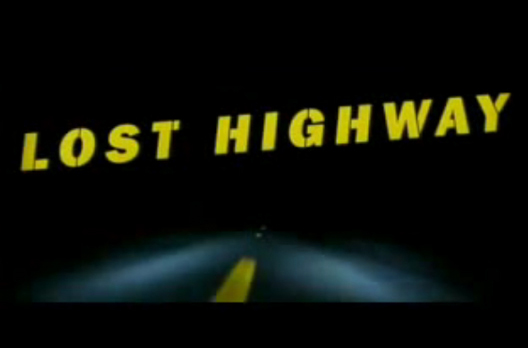 |
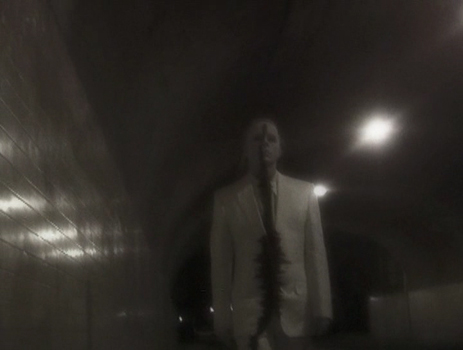
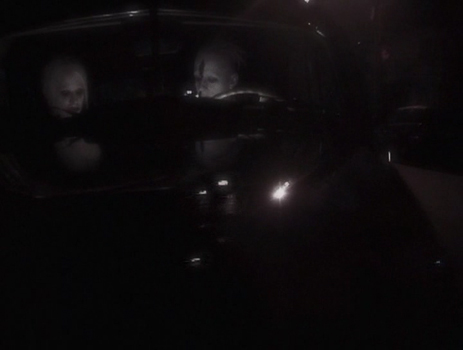
| The road sequences filmed by night are quite reminiscent of David Lynch's 1997 movie 'Lost Highway', in which Manson and Twiggy actually played a part within a surreal, snuff-like short sequence towards the end of the movie (the band has also participated in the movie's soundtrack itself). | |
 |
 |

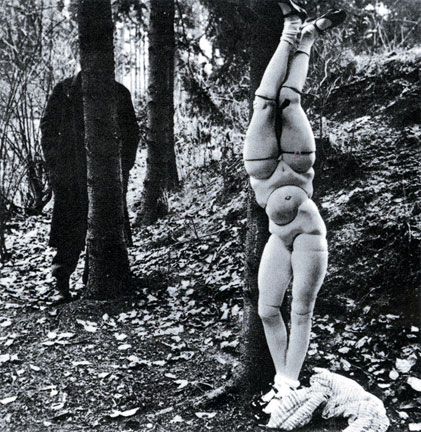
 The Doll photograph by Hans Bellmer, 1938.
Hans Bellmer, German born in 1902 and another artist whose work was condemned as "degenerate" by the Nazi party, was the most consistently explicit of the artists involved in the surrealist movement in the early Twentieth Century. Bellmer considered certain pornography to be art and his own work at times leaves no delineation between art & pornography with a particularly explicit series done as an homage and addressed "to" the Marquis de Sade, who was very influential to the surrealist movement in that he was regarded as the epitome of the surrealist man as his works embodied the antithesis of societies moral and religious standards. Though his drawings are unparalleled to any other surrealist, Bellmer's name is synonymous with his Doll which is his most well known creation.
 |
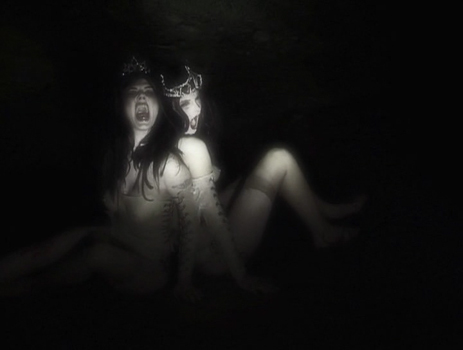 |
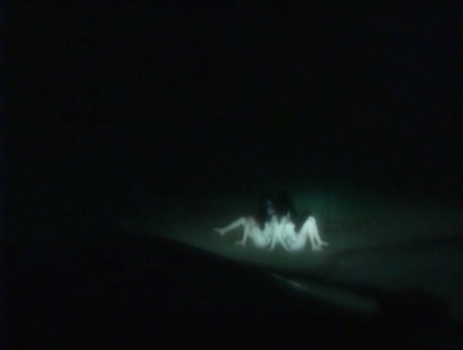
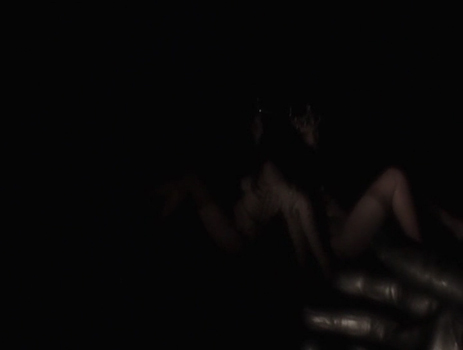
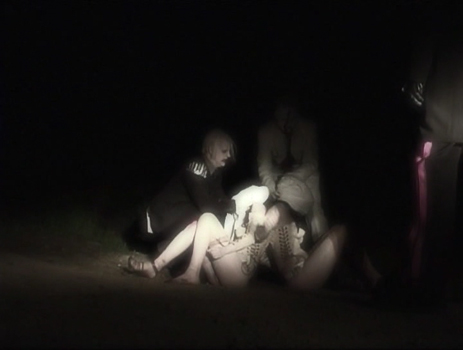
| The spider-like siamese twins creature encountered by the band like a harmed animal on the side of the road is quite reminiscent of Hans Bellmer's creation, besides the obvious allusion to the 1932 movie Freaks. Manson himself has been sewing the naked siameses costume, which would later re-appear in the mOBSCENE video as described on our Grotesk Burlesk article. Several variations of the twins could be seen during the subsequent tour performances. | |
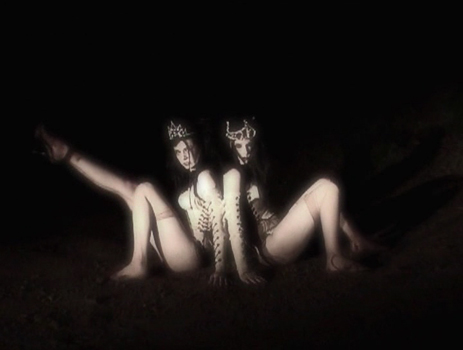
Bellmer created many different versions of his Doll, some ranging from plump with truncated limbs to bizarre yet seductive long legged of a fully matured woman. Each doll though was created with the same elemental formula of two sets of legs on polar ends which share a navel. The primary subject depicted in DOPPELHERZ are the siamese twins which Manson captures to use a his play-thing, a type of "living doll" abducted whose capture and enacted submission of is his outward pleasure we see in the film. It goes without saying that the surrealist artists of early Twentieth Century were a primary influence on The Golden Age Of Grotesque, with Hans Bellmer arguably the most notorious of them all, making his doll a large influence on the use of the siamese twins throughout the era, along with the other influences outlined in The ART in The GOLDEN AGE OF GROTESQUE section. Particularly within DOPPELHERZ the siamese twins, in their depiction and role in the film evoke Bellmer's creation as an inanimate, submissive, unfeeling creation used for the pleasure of those who capture and possess it.
 |
 |
| Left; The Doll photograph by Hans Bellmer. Note the stalker in hiding, paralleling the prominent theme of Sex Murder in Manson's album and imagery. | |
The creative adventure began for Hans Bellmer, in 1933, when he started making a wooden doll. The activity so absorbed and preoccupied his energies that he gave up a steady job for it. He had been working for several years as a mechanical draughtsman and hitherto the only outlet for his artistic inclinations had been in book-illustration or sketches reflecting of his friend George Grosz, the scathing caricaturist of 'Ecce Homo'.From Hans Bellmer by Saran Alexandrian (OOP)
His doll was at once a protest against the rise of Nazism, which he countered with a gratuitous tribute to playfulness, and a step-by-step realization of all those amorous sensations that a child-woman can provoke. He wanted to make a toy for adults adults that would be instrumental in freeing them from their complexes. Man's relationship with this doll would allow him to define his potential for game-playing, to work out his aggressions and satisfy his desires with a mere dummy.
The inventions of this ambiguous creature was to open up for Bellmer a field of activity that suited his talents. The drawings, the gouaches, the engravings, the objects that he was subsequently to construct, derived from an awareness of the problems of the body that he gained from creating his doll. Playing around with it, setting it up in every imaginable position, he discovered the existence of a 'physical consciousness' that is to say a mass of repressed desires that aim at rebuilding the human anatomy on the pleasure principle.
 |
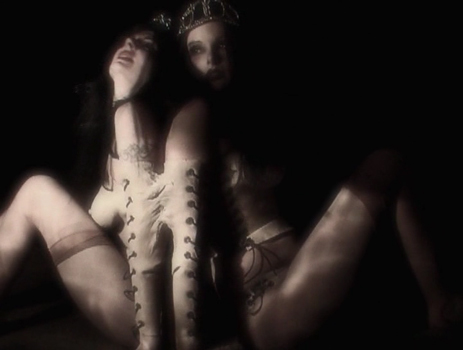 |
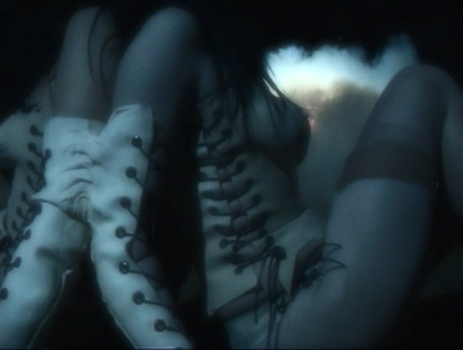
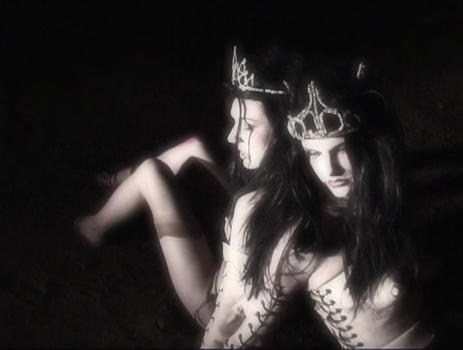
| Extra views of Manson's siamese dolls. The different crowns are reminiscent of the Alchemical Androgyne Manson alluded to back during the Holy Wood era. | |
 |
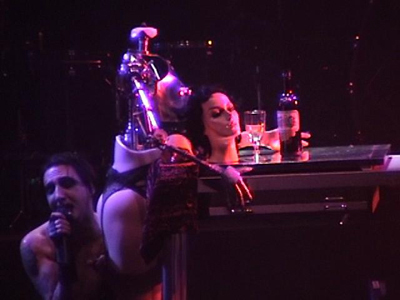 |
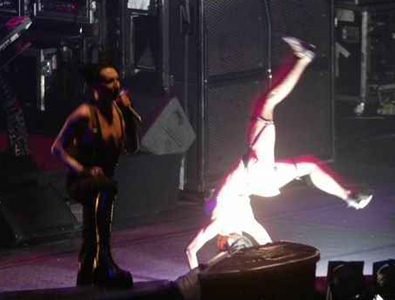
| Scenes from the Grotesk Burlesk tour keeping up with the doll's theme, the right one being a trick borrowed to Rudy Coby, 'The Coolest Magician on Earth' whose android girlfriend 'Nikki Terminator' first appeared in a 1996 TV special. It later re-surfaced in Manson's Rape Of The World tour. | |
 |
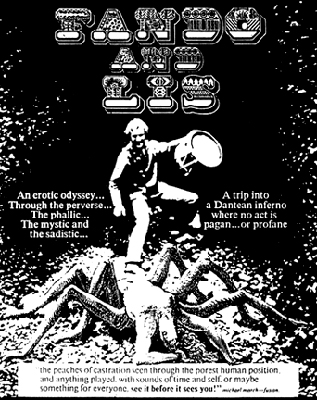 |
| While the spider-like creature formed by the conjoined roaring twins obviously prefigures the Wight Spider from the High End Of Low's lyrics in 2009, it is also strangely reminiscent of another arachnidan lascivious beauty that appears on a poster for Jodorowsky's 1968 Dantean film 'Fando y Lis'. | |
 |
 |
Lyrics from Doppelherz."The only thing original in this world is the way we destroy things".
 |
 |
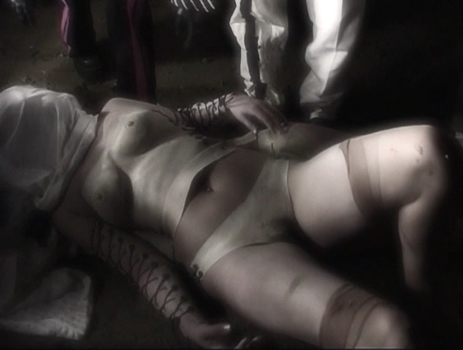
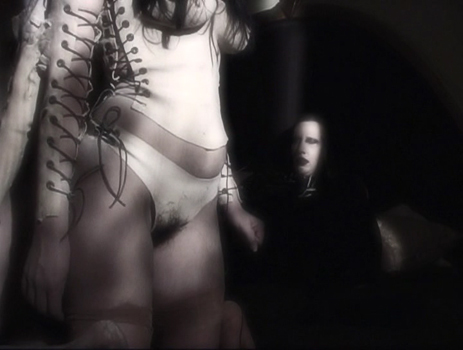
| The twins' mutilated aspect and the resort to genuine pubic hair crudely echoes Manson's watercolor renditions of Elizabeth Short's gruesome murder scene. | |
The line which directly follows, "Everything has already been created / So we can only deal with new ways of destroying them", is very childish and Dada in essence, and echoes the first line sung by Manson in The Golden Age Of Grotesque "Everything has been said before / There's nothing left to say anymore", a nod to Duchamp's concept according to which "everything has been said in art" as detailed in the "Arch Dandy of Dada" article on The NACHTKABARETT.
 |
 |
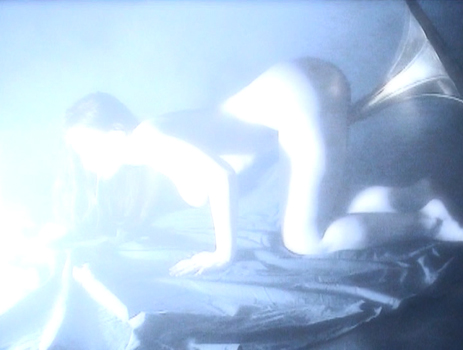
| The bed on which Manson lays the creature in the video actually re-surfaces in the 'Heart-Shaped Glasses' 2007 video, in the end of which Manson is seen having sexual intercourse with Evan Rachel Wood under a rain of blood. | |
Marilyn Manson, in an interview for Face, May 2003."Burlesque, vaudeville, cabaret - it all had the same purpose, to take people's minds off things; the idea of your life being entertaining in itself. Sometimes it's about a concert, sometimes it's about placing a gramophone horn in a women's vagina. Or painting an elephant black or setting a piano on fire".
 |
 |
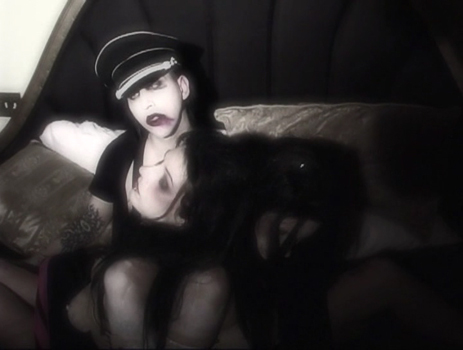
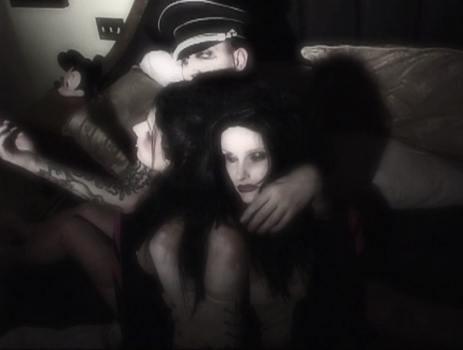
| The grotesque inclusion of Mickey Mouse's head (left, in the background), contrasting with the nazi officer cap prefigures Manson's collaboration with Helnwein for what should have been the album's cover, and the Rodent Death's head logo that synthesized it during Manson's tour. Right; another subliminal shot of surrealist inspiration flashing during the video, possibly again from the Helnwein collaboration, and which Manson referred to in the interview above. | |
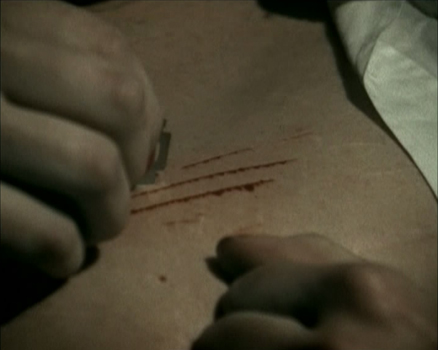
Lyrics from Doppelherz."I’m a canvas that bleeds / And I’m painted with fingers".
 |
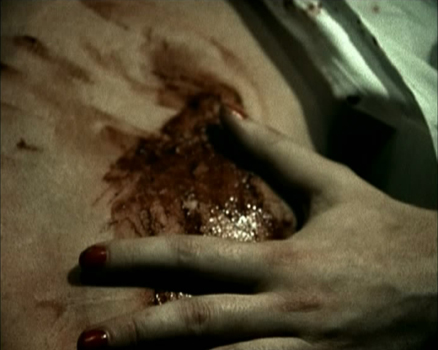 |
| This passage above would later be directly illustrated in the (s)AINT video in which Manson is seen indulging in self-painting with his own blood which he spreads with his fingers, marking a continuity with the song's lyrics : "You said I tasted famous so I drew you a heart / But now I'm not an artist I'm a fucking work of art". A further correspondance in this vein would be the song 'Leave A Scar' from The High End Of Low, 2009, in which Manson ironically evokes a more recent experience of self-mutilation : "I'm just a painting that's still wet, if you touch me I'll be smeared, you'll be stained, stained for the rest of your life." | |
Parallelly, passages from the song Slutgarden "(I'll never promise you a garden) / You'll just water me down" and "I'm a VCR funeral of / Dead-memory waste and / My smile is a chainlink fence / that I have put up / Love the enemy, my love is thee enemy" are almost taken verbatim from several moments of Doppelherz, just as the "senile teens" and "Version point (less) downloadable suicide" in the song Vodevil. Another notable line appears both in Doppelherz and (s)AINT is : 'Your "sell-by date" (has) expired'. Manson continued to distillate powerful tirades from Doppelherz in his two following albums, 'Eat Me, Drink Me' and 'The High End Of Low' as shown in links below...
Doppelherz live at Greek Theatre, LA.
10/10/2003
Also, at several (caucasian) occasions during his Grotesk Burlesk tour, Manson could be heard reciting whole passages from his Doppelherz monologue such as the example above, a remarkable occurence of Manson's obsession for always combining different aspects and disciplines of his Art (thanks to user Heather Quick from Babalon for this find). The full, official transcription of the film's credits and soundtrack can be found on Gottfried Helnwein's website.

S e e a l s o o n T h e N A C H T K A B A R E T T :
 GROTESK BURLESK | Imagery from the Golden Age Of Grotesque era & live, including influences from Gottfried Helnwein, imagery from the Weimar Germany, an examination of the Siamese sisters from the movie "Freaks" and the mysterious gramophone picture from Doppelherz...
 LES FLEURS DU MAL | "I keep watering a dead flower / Keep watering a dead flower / Keep watering the dead flower [...]
Everything I make is a piece of plant / In some day it could have been a flower / And the things that are flowers are dead [...] There’s not enough of me to make a bouquet /
Stop watering a dead flower / Stop watering the dead flower..." These words from Doppelherz implement a vast range of allusions to flowers starting with the metaphorical lyrics from Mechanical Animals, to Baudelaire's poetic collection 'The Flowers Of Evil' Manson payed tribute to in the title of his 2007-2008 art exhibition.
LES FLEURS DU MAL | "I keep watering a dead flower / Keep watering a dead flower / Keep watering the dead flower [...]
Everything I make is a piece of plant / In some day it could have been a flower / And the things that are flowers are dead [...] There’s not enough of me to make a bouquet /
Stop watering a dead flower / Stop watering the dead flower..." These words from Doppelherz implement a vast range of allusions to flowers starting with the metaphorical lyrics from Mechanical Animals, to Baudelaire's poetic collection 'The Flowers Of Evil' Manson payed tribute to in the title of his 2007-2008 art exhibition.
 BLACKFACE, "DEGENERATE" ART & FASCISM | A closer look at Manson's identifications to artists that were labeled "degenerate" by the rising Nazi party and persecuted in 1930's Germany during The Golden Age Of Grotesque, the evocations of fascism in the band's imagery and performances since Antichrist Svperstar, suggesting a union of opposites which echoes the dichotomy that preexists in the name "Marilyn Manson" itself, and the intentions behind the omnipresent Blackface makeup : "You cover your mouth with blackface, which really represents a franchise, moneymaking, and slave creation of entertainment, that isn't even human."
 LEST WE FORGET - THE MASKED DOPPELGÄNGERS | "The real is the scariest thing of all. I'm attracted to the idea of the artist removing the mask. But now...I'm not sure what is underneath all of my masks...or if there is anything. Probably another mask. The word 'persona' really implies playing someone else when you're creating things, but I don't think I could be more 'me' when I'm creating things. Is there a good side to that?" Marilyn Manson during his Celebritarian era, posing in several shots with his Official Face Mask, always with the underlying theme of the Doppelgängers.
 EAT ME, DRINK ME - ARE YOU THE RABBIT? | Eat Me, Drink Me, admittedly being Manson most personal work to date back then, contains many lyrical revisitations to past writings, such as the lines "I'm a kick stand in your mouth" and "I know the insurrance won't cover this" in the song 'Are You The Rabbit' which directly come from Doppelherz.
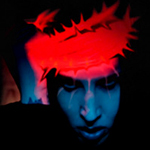 THE HIGH END OF LOW - DEVOUR ETC | The repetitive lament which concludes the song 'Devour', first track of The High End Of Low, is once again copied verbatim from Doppelherz which adds to its cyclical dimension. The allusions don't stop here, as the line "I'm just a painting that's still wet" from 'Leave A Scar' follows a concept elaborated in Doppelherz and repeated in (s)AINT, as shown above. The variations on the phrase "The only thing in this world that does not die is money" in Doppelherz are also echoed in the album's preoccupations, notably with the ironic ($) logo which surfaced in the 'Arma...Geddon' video.